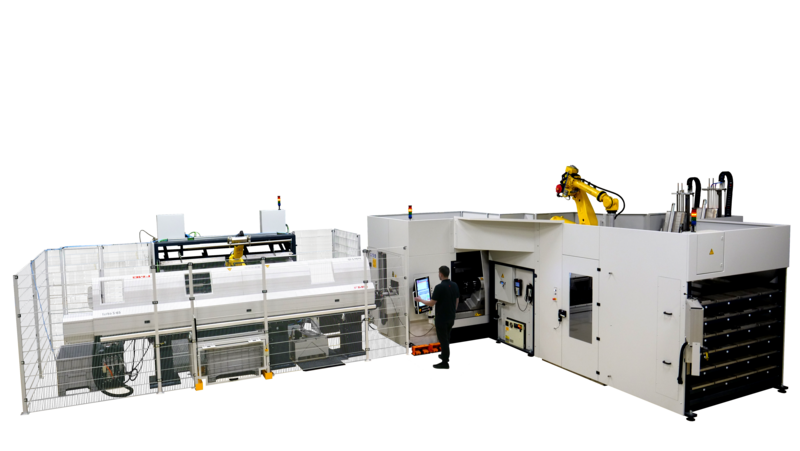
Requirements:
1. Order control via the ERP system
2. Production batch size 1-16, 5000 different parts
3. Storage of components washed and dried ready for assembly
4. 10 different raw tubes as raw material, 29-50 mm
5. Generation of the CNC programme using information from the ERP system
Considerations:
- There were many sticking points with this system, which required a high degree of coordination in advance:
- A clamping device that allows thin-walled tubes in the 29-50 mm range to be clamped without the need for set-up
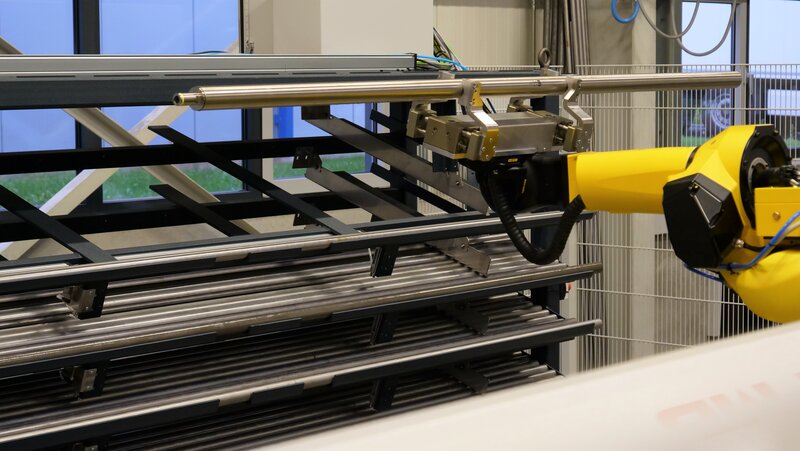
- A bar feeder that can be loaded via the robot, but which also covers the entire range without set-up
- Software that receives data from the ERP, sorts orders by pipe diameter, creates the appropriate CNC programmes and reports the completion of the respective batch back to the ERP
- Cleanliness of the components that enables direct further processing in assembly
- Operation so simple that no trained personnel are required at the system
Solution:
The actual processing task of the system is to manufacture components from tubular material that have a length assigned to the respective chassis, have chamfers or radii at the ends, are partially turned outwards on the inside and, depending on requirements, have holes or milled areas on the circumference. This information, as well as the number of pieces in the batch, is transferred directly to the system upon receipt of the order.
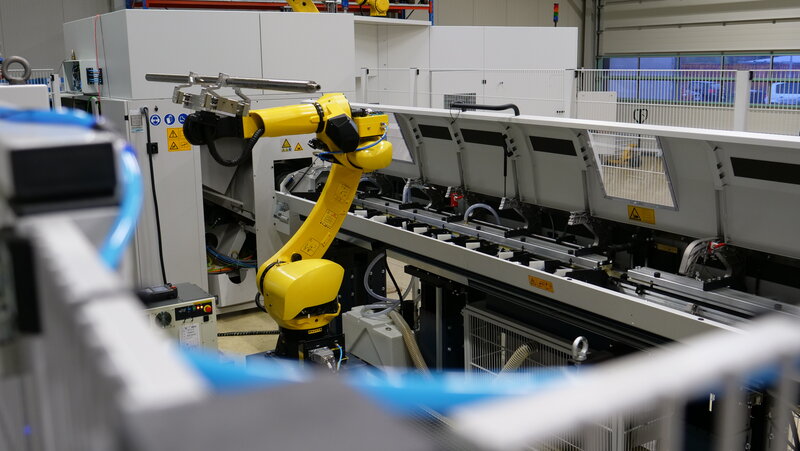
Based on the information received, our software sorts the orders by pipe diameter at intervals and begins work. The first robot removes the required pipe from the shelf magazine. Pipes are also returned there as long as further parts can be manufactured from them.
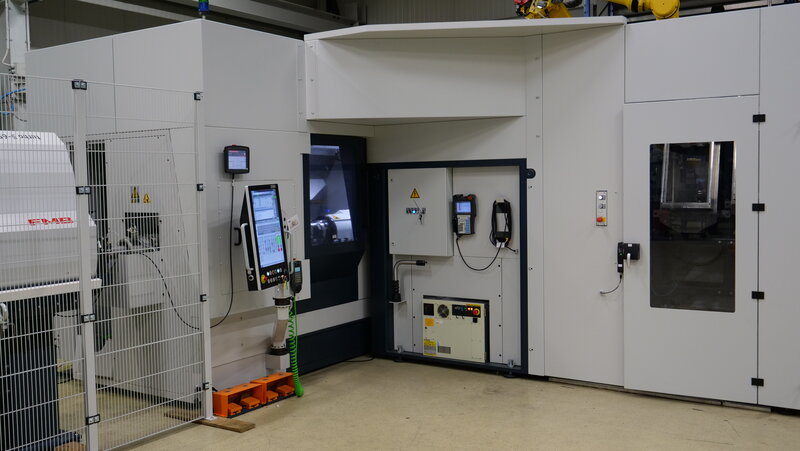
Machining is carried out in a SPINNER TC800 with two special chucks, which cover the clamping range without deforming the tubes and do not require any set-up parts.
Based on the information received from the ERP, the parameter program is generated on the CNC machine and machining begins. An integrated measuring probe is used to cross-check the pipe diameter to compensate for operator errors, as well as for dimensional control and tool wear compensation.
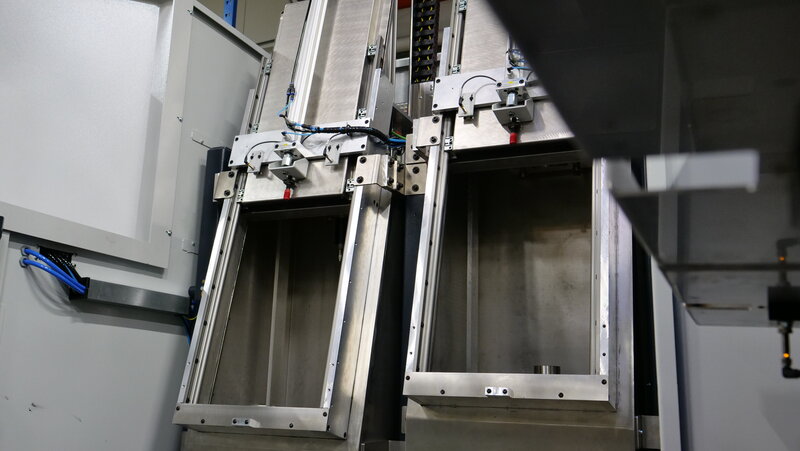
Finished components are removed from the system by a second robot and then fed to a brushing and washing station in the first step. In the next step, the robot transports the components to the blowing station, where they are blown dry. The robot gripper itself is also cleaned during this time, so that clean and dry components are then placed in the finished parts rack. The components are sorted and stored according to the production order. Once the respective order has been completed, feedback is sent to the customer's ERP system and the assembly order is initiated.
The components required for assembly are prepared, the barcode of the production order is scanned by the warehouse staff at the system, and a light indicates the corresponding compartment for the appropriate removal.