


Requirements:
- Cost-effective and fully automated production of screws
- Automatic feeding of screw blanks from an existing feeder
- Automated loading and unloading of the machine
- Integration of optical position detection for the screw head
- Complete turning operation followed by thread rolling
- Automatic quality control of finished parts
- Feedback of measurement results to the machine for automatic correction
- Separate sorting of good, non-conforming (NIO), and SPC parts
Considerations:
- Integration of the automation system with an existing customer feed system
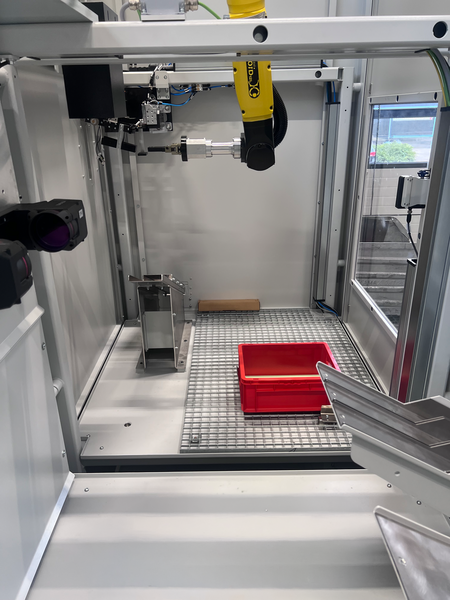
- Feeding of screw blanks via a feed rail for separation
- Pick-up and orientation-based transfer of the screws by the robot
- Optical detection of the screw head using a camera unit
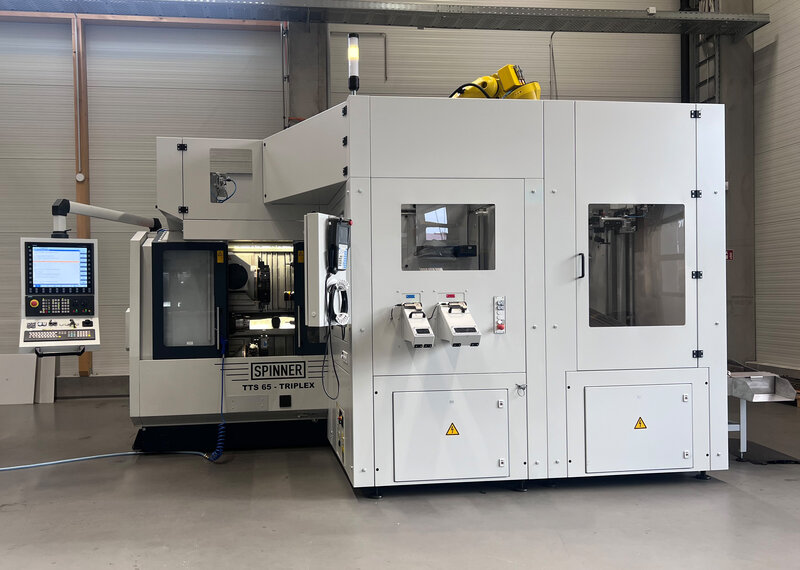
- Automated loading and unloading of the SPINNER TTS 65 Triplex
- Integrated optical measurement unit for inspecting finished parts
- Automatic feedback of measurement results for correction
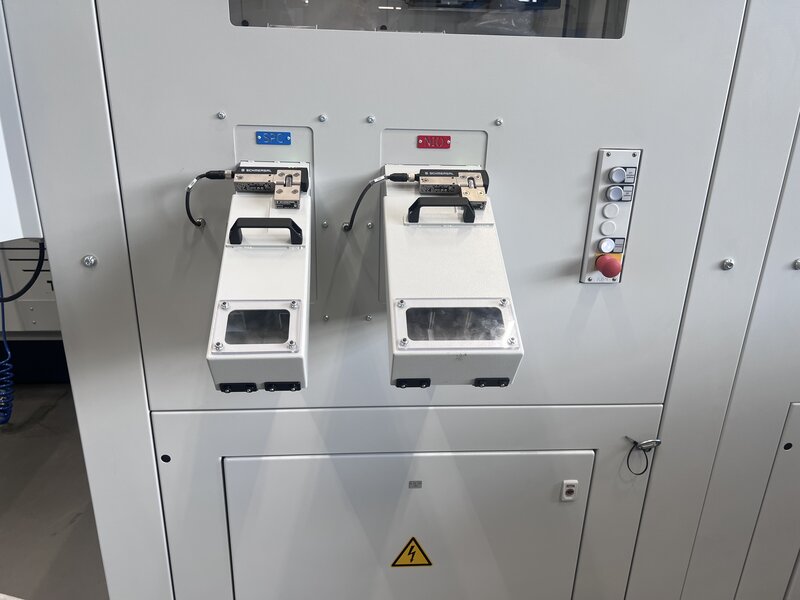
- Separate ejection of good, NIO, and SPC parts
Solution:
With this automation solution, screw blanks are turned into finished screws—completely automatically. The screw blanks are fed into the rear of the machine via an existing customer-supplied feeder and travel along a feed rail into the automation cell.
At the end of the feed rail, the blanks are separated and picked up by the robot. A camera unit detects the rotational orientation of the screw head, allowing the robot to transfer the workpieces to the machine in the correct orientation.
The screws are loaded through the loading flap on the right-hand machine door into a SPINNER TTS 65 Triplex and fed into the main spindle. All turning operations take place there. Finally, the threads of the screws are rolled.
After machining, the finished parts are returned to the automation system via the robot and automatically inspected by an optical measuring unit. The measurement results are fed back to the machine, enabling it to make automatic corrections.
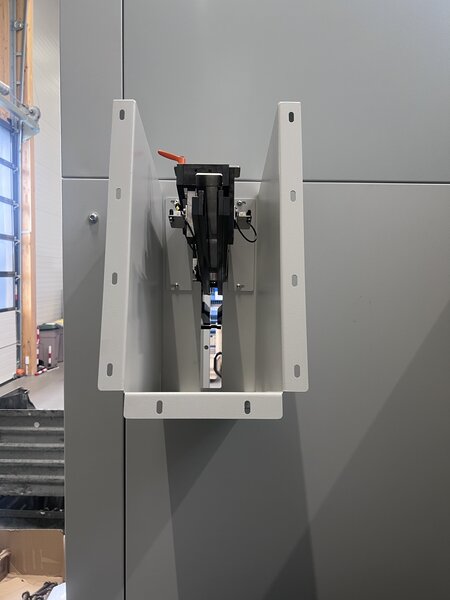
The inspected, good parts are discharged via a finished-parts chute. Additionally, there are separate discharge systems for NIO and SPC parts.
The result is a fully automated manufacturing solution that integrates feeding, orientation detection, machining, thread rolling, and quality control. This automates the entire manufacturing process and ensures continuous quality monitoring.


