Requirement:
- Increased efficiency in single-part and small-batch production
- 24/7 operation for optimum machine utilisation
- Fully automated handling including clamping device change
- High-precision production without operator intervention
- Future-proof production for industries such as semiconductors, medicine, optomechanics and aviation
- Easy operation without special robotics expertise
- Minimisation of downtime through smart sequence control
- Relief for skilled workers through automation of repetitive tasks
Considerations:
- Combination of SPINNER U5 630 and ROBOBOXtreme
- Intelligent parameter query that avoids downtime during the loading process
- Automated changeover of workpieces and clamping devices in a single cell
- Full integration prevents interface problems
- Blow-off unit for clean transfer of workpieces
- Minimal training required for employees thanks to intuitive operation
Solution:
CNC Center Northeim GmbH is a model company. Growing step by step, a lot of hard work and dedication on the part of the owners and courage in the right places have brought the company to where it is today. The company, owned by Mr and Mrs Salwasser, is known for its high quality, even when it comes to components with extreme requirements.
The next step in the company's growth was the integration of a SPINNER U5 630 – a 5-axis milling machine with 122 tool stations and cooling lubricant temperature control – in combination with a fully automatic ROBOBOXtreme. The automation cell enables unmanned production of individual parts and small series around the clock – previously, Mr Salwasser had to go to the production facility at night and on weekends to replenish and change materials.
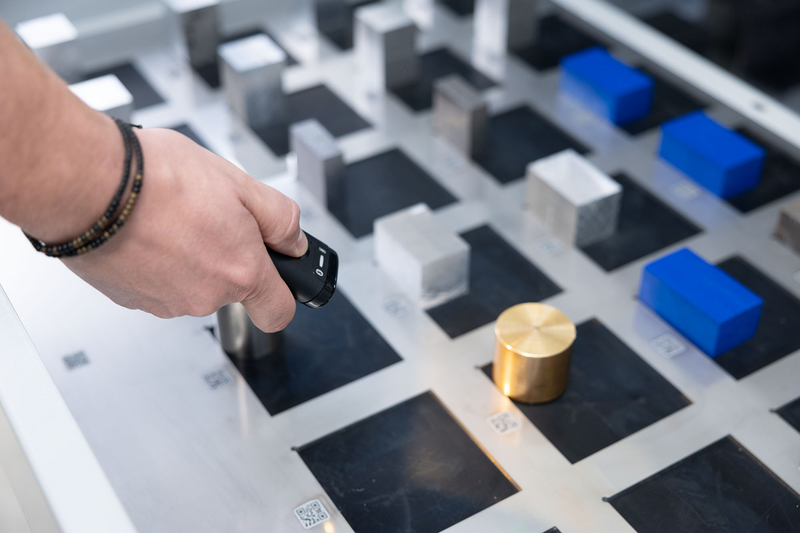
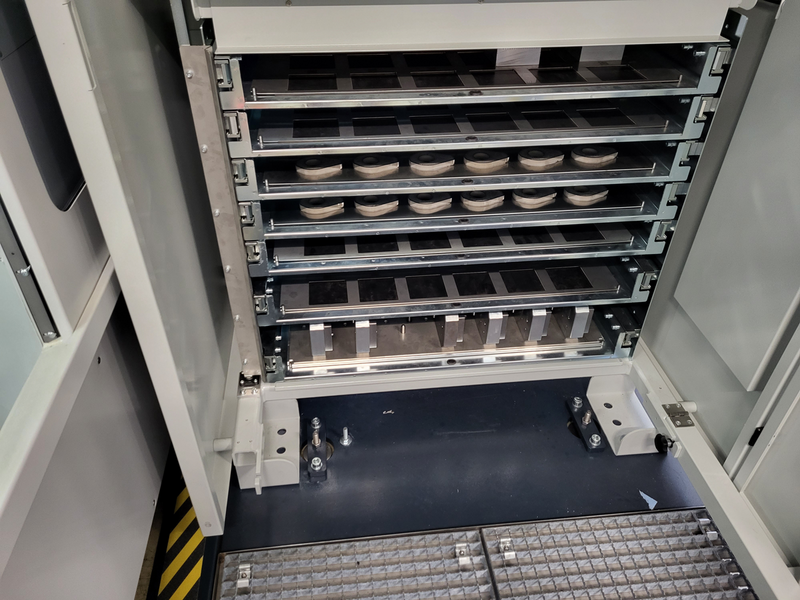
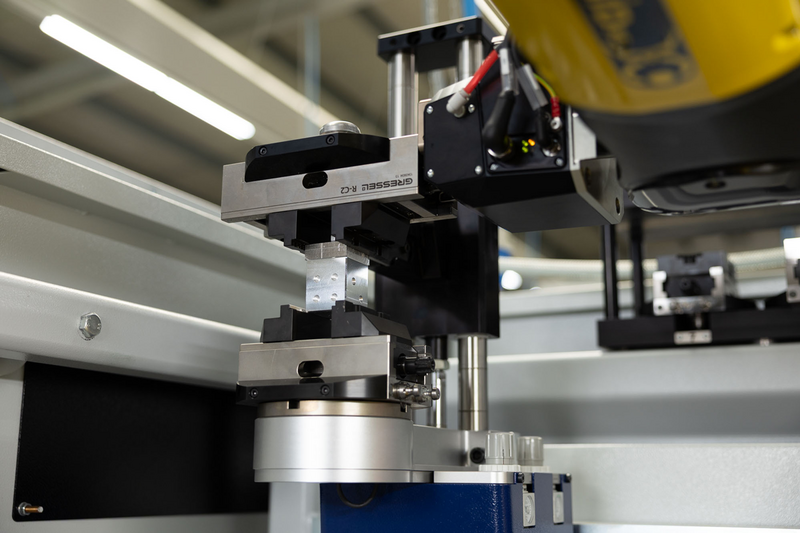
The ease of use of the robot cell was a decisive factor for Mr Salwasser in taking the step to invest in this project. The operator simply enters a few parameters. The robot then automatically recognises the appropriate clamping device, positions the clamping jaws, removes the raw part from the drawer, transfers the clamping device and workpiece to the machine and starts the appropriate CNC programme. The robot then transfers the component to a second clamping device so that the rear side can also be machined – fully automated 6-sided machining.
This process corresponds to the familiar manual method – but is fully automated. The system is bespoke.