Requirements:
1. System for use in training and further education
2. Separate operation of machine and automation
3. Automation with many possibilities to demonstrate the breadth of the possible spectrum
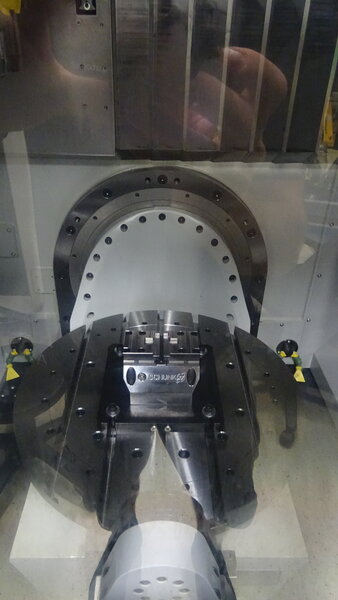
4. SPINNER U5-630 as the base machine and a suitable addition to the machine park
5. Joint production of training materials for internal use
Considerations:
The aim of the system on the part of BZI was to give training participants an insight into the field of automation, especially with robots. Automation in the field of machining is a topic that every manufacturing company deals with.
At the time of the enquiry, there were no specifications regarding the exact design of the automation cell. The aim was to show as wide a range of automation possibilities as possible in the given space. In order to be able to use the system ideally for training purposes, it was important to be able to operate the machine and the automation separately so that two groups could be at the system at the same time and the system could be used optimally.
Solution:
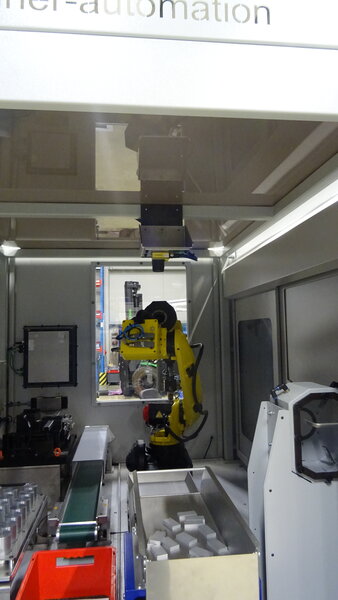
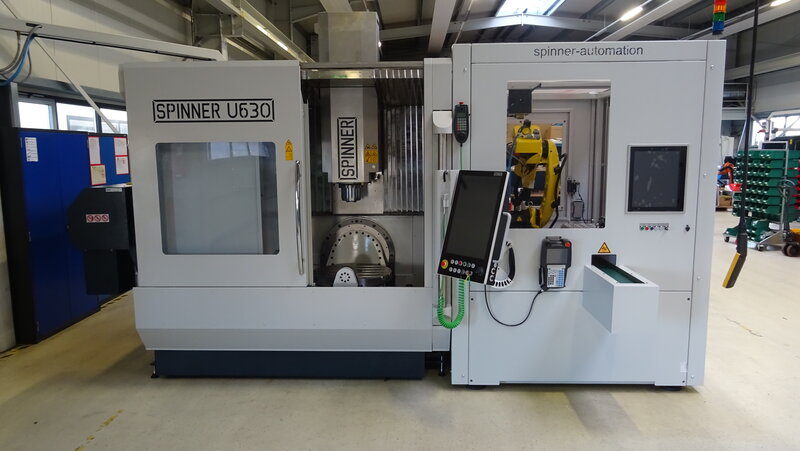
In addition to the requested SPINNER U5-630, we supplied the customer with an automation cell that offers a range of options:
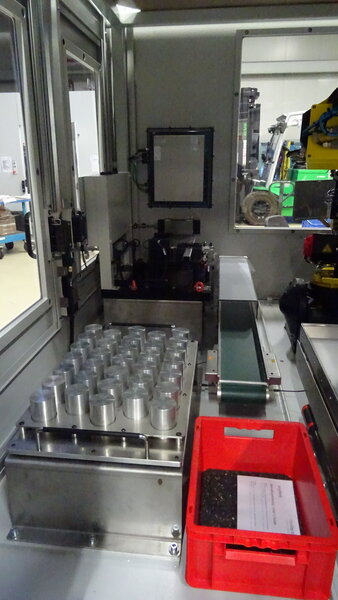
- Feeding of components from pallets
- Feeding of components from bulk material with position detection of the components via a camera system
- Deposition of finished parts either on pallets or on a conveyor belt
- Blowing off components after processing
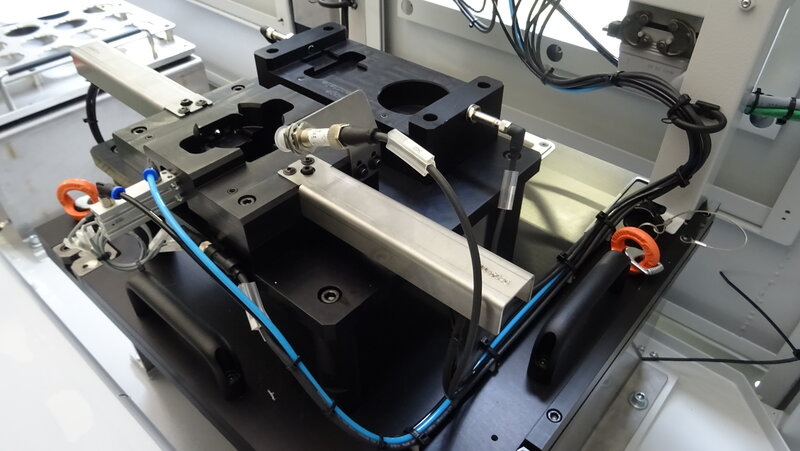
- Measuring components in a separate measuring station
- Individual operation of the automation system without a machine for training purposes
- Open PLC interfaces so that practical training in the form of system expansion can be taught in the PLC course
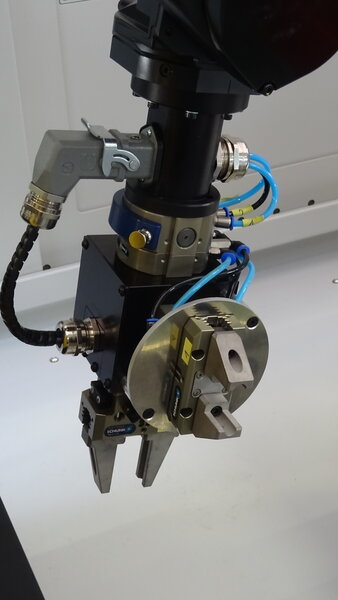
- Quick-change interface for the robot gripper to switch between cubic and round parts
Unlike our other systems, the aim here was not to build a system that achieves a specified output, but rather to jointly lay the foundation for targeted training in automation at the BZI.
Therefore, in addition to the technical solution, software for offline programming of the Fanuc robots was also included, allowing initial experience in handling the robot and kinematics to be gained in the classroom, and the basis for the training materials for the courses at the BZI was created jointly.